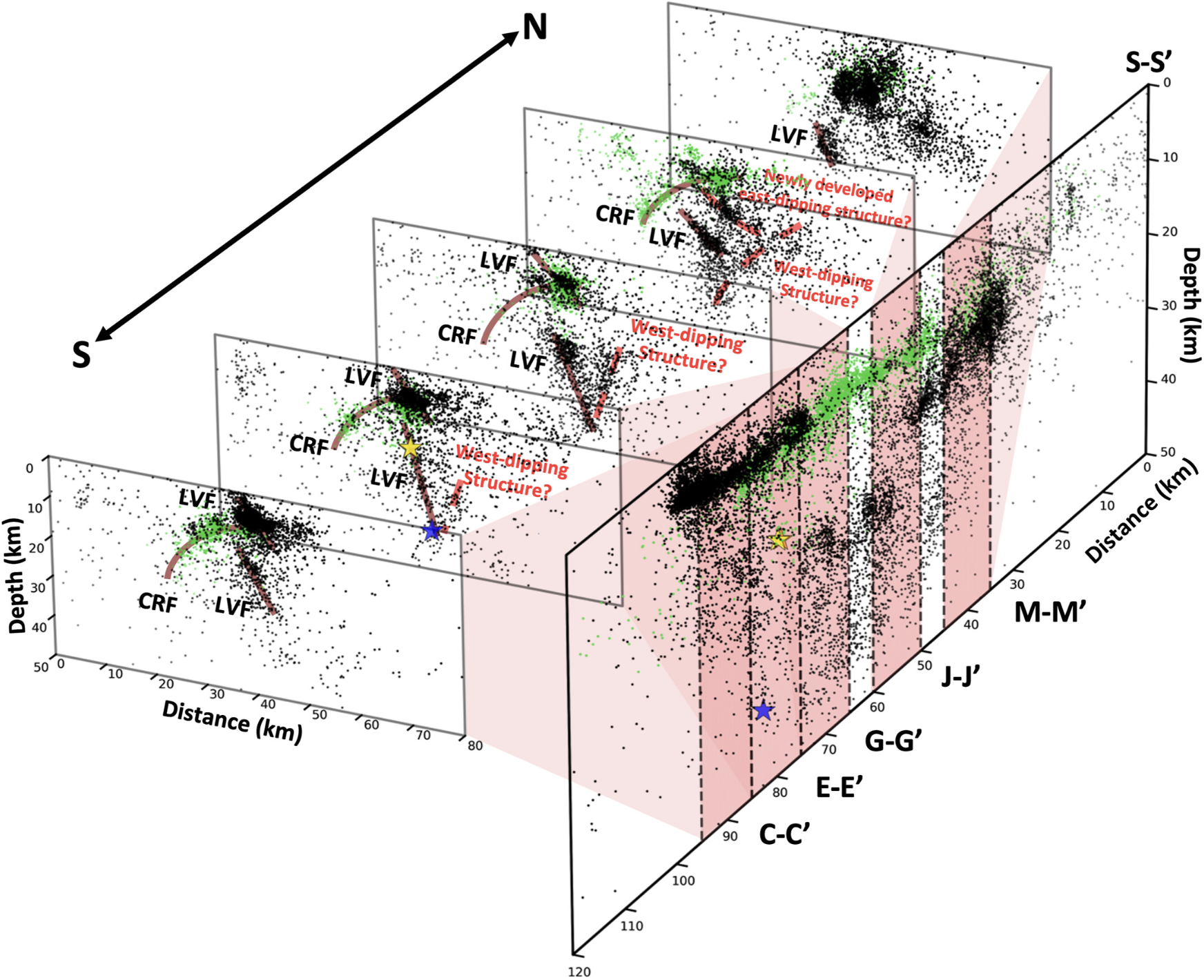
A devastating MW 7.4 earthquake struck the northern Longitudinal Valley in eastern Taiwan on 3 April 2024. The intense and prolonged aftershock sequence over the following month exposed both the region's tectonic complexity and the challenge of timely earthquake cataloging. Gaps in the initial catalog from the local agency revealed short-term incompleteness, potentially delaying critical hazard assessments and emphasizing the need for more efficient data-processing workflows. To address this issue, we developed an automated workflow, AutoQuake, which processes continuous waveform data using machine learning (ML) models and seismological algorithms. AutoQuake integrates phase picking, phase association, 3-D double-difference relocation, local magnitude estimation, and focal mechanism determination within a flexible Python interface that allows user customization. The resulting ML-enhanced event and focal mechanism catalogs are five times larger than the local agency catalog and 10 times larger than the moment tensor inversion catalogs. The 2024 Hualien earthquake sequence revealed by AutoQuake complements the 2018–2021 seismicity in spatial distribution and resolves detailed fault interactions between the Central Range Fault (CRF) and the Longitudinal Valley Fault (LVF) systems, including a newly-developed deep west-dipping fault and an east-dipping fault parallel to the LVF. These features suggest an evolving system of conjugate faulting that accommodates the high convergence rate along the plate boundary (∼30–40 mm/yr). This study demonstrates the potential of ML-based workflows to efficiently process large volumes of seismic data, enabling timely responses to major earthquake sequences and offering new insights into the complex seismogenic structures in the tectonic transition from collision to subduction.
Full Article:
Yang, H.-Y., Huang, H.-H.*, Wu, E.-S., Chen, H.-A., Liu, C.-N., Hsu, Y.-F., Liang, W.-T., Ku, C.-S. (2025). An ML-enhanced Earthquake catalog for the 2024 MW 7.4 Hualien Earthquake sequence: Insights into structural transition from collision to subduction in eastern Taiwan. Journal of Geophysical Research: Solid Earth, 130, e2025JB032792. https://doi.org/10.1029/2025JB032792